
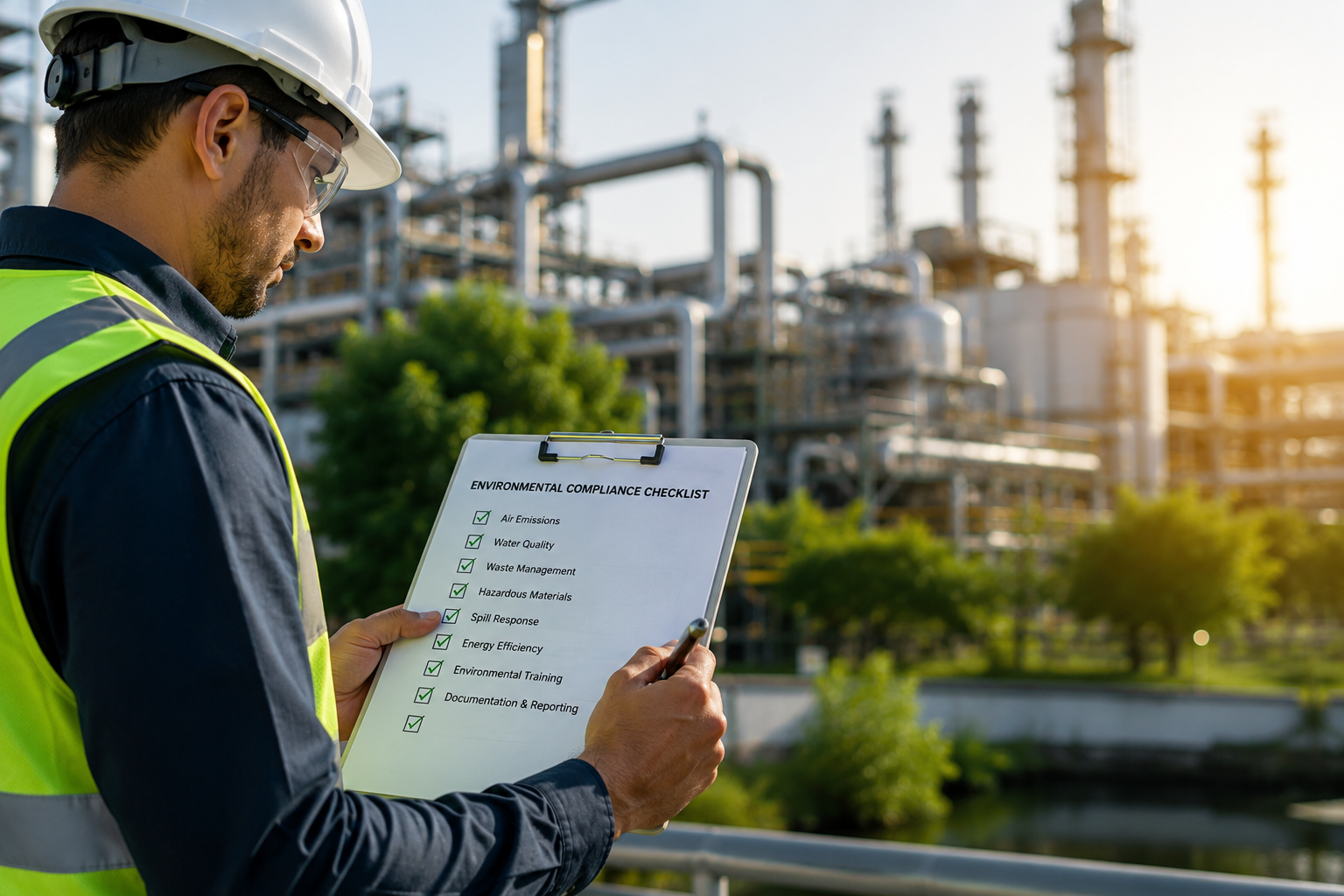
Introduction
Environmental compliance is no longer optional for modern businesses. Regulatory agencies worldwide are increasing enforcement efforts, and companies that fail to comply with environmental laws can face substantial fines, legal liabilities, operational disruptions, and reputational damage.
Whether you operate in manufacturing, construction, energy, logistics, waste management, or commercial facilities, maintaining environmental compliance is critical for long-term success.
This comprehensive environmental compliance checklist outlines 25 essential requirements every business should follow to reduce risk, avoid costly penalties, and demonstrate environmental responsibility.
What Is Environmental Compliance?
Environmental compliance refers to adhering to environmental laws, regulations, permits, standards, and industry requirements designed to protect air quality, water resources, land, ecosystems, and public health.
Businesses must identify applicable environmental regulations and implement procedures to ensure ongoing compliance with local, regional, and national environmental standards.
Why Environmental Compliance Matters
- Avoid regulatory fines and penalties
- Reduce environmental risks
- Protect company reputation
- Improve operational efficiency
- Enhance sustainability performance
- Meet customer and stakeholder expectations
- Prevent legal disputes and enforcement actions
Environmental Compliance Checklist: 10 Essential Requirements

1. Identify Applicable Environmental Regulations
Determine which environmental regulations apply to your operations, industry, location, and activities.
Keywords:
Environmental regulations, environmental compliance requirements, regulatory compliance
2. Obtain Required Environmental Permits
Ensure all necessary permits are secured before beginning operations.
Examples include:
- Air emission permits
- Water discharge permits
- Waste management permits
- Hazardous material permits
Keywords:
Environmental permits, environmental licensing, compliance permits
3. Conduct Environmental Risk Assessments
Evaluate potential environmental hazards and their impact on operations.
Keywords:
Environmental risk assessment, environmental risk management, environmental consulting
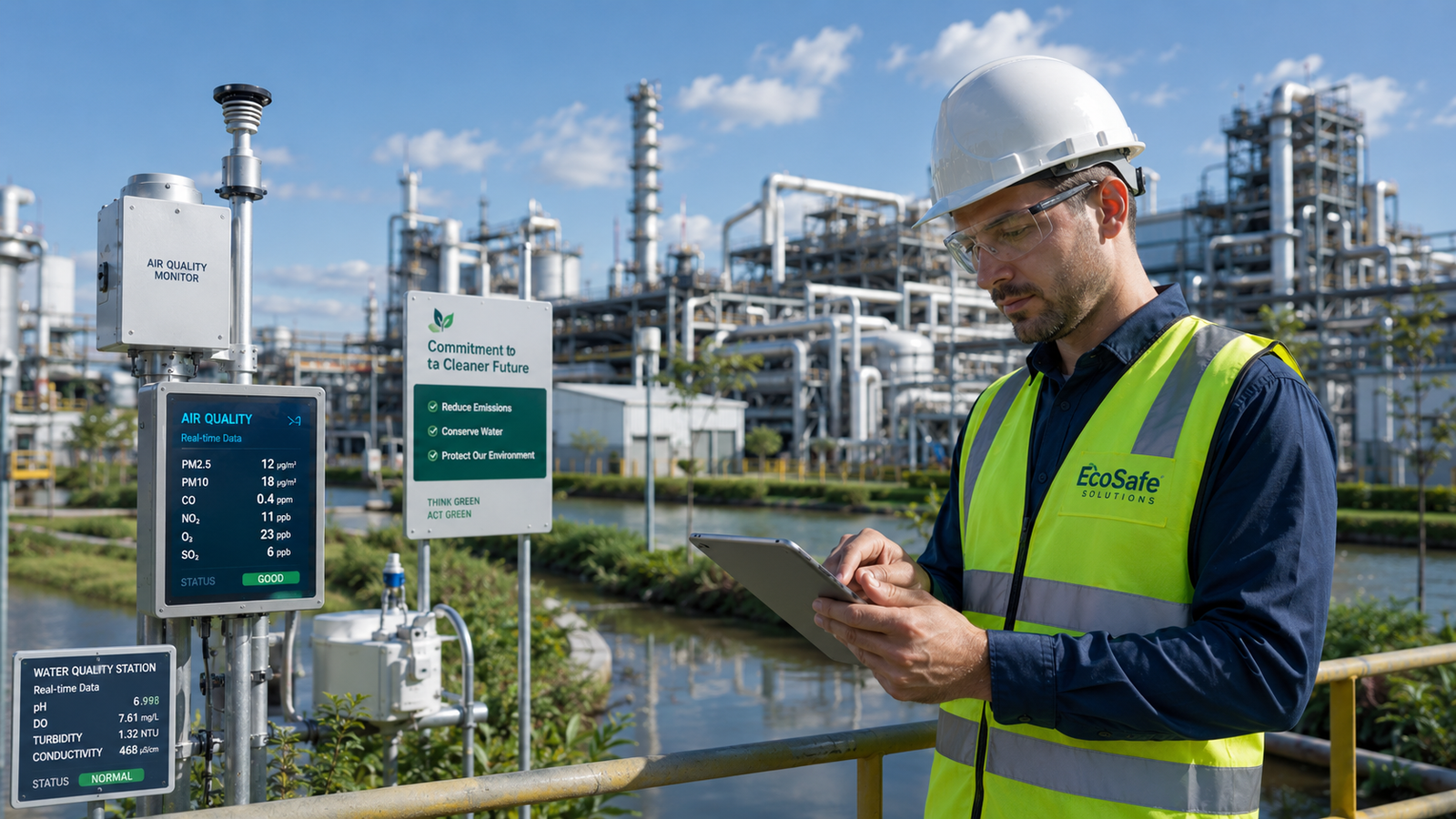
4. Maintain Accurate Environmental Records
Keep detailed records of inspections, waste disposal, emissions monitoring, and compliance activities.
Keywords:
Environmental recordkeeping, compliance documentation
5. Implement Waste Management Procedures
Develop systems for handling, storing, transporting, and disposing of waste responsibly.
Keywords:
Waste management compliance, sustainable waste management
6. Properly Manage Hazardous Materials
Ensure hazardous substances are identified, labeled, stored, and handled according to regulations.
Keywords:
Hazardous waste management, hazardous material compliance
7. Monitor Air Emissions
Track emissions from equipment, vehicles, and industrial processes.
Keywords:
Air quality compliance, air emissions monitoring
8. Manage Water Usage and Discharges
Monitor water consumption and ensure wastewater discharges meet regulatory standards.
Keywords:
Water compliance, wastewater management
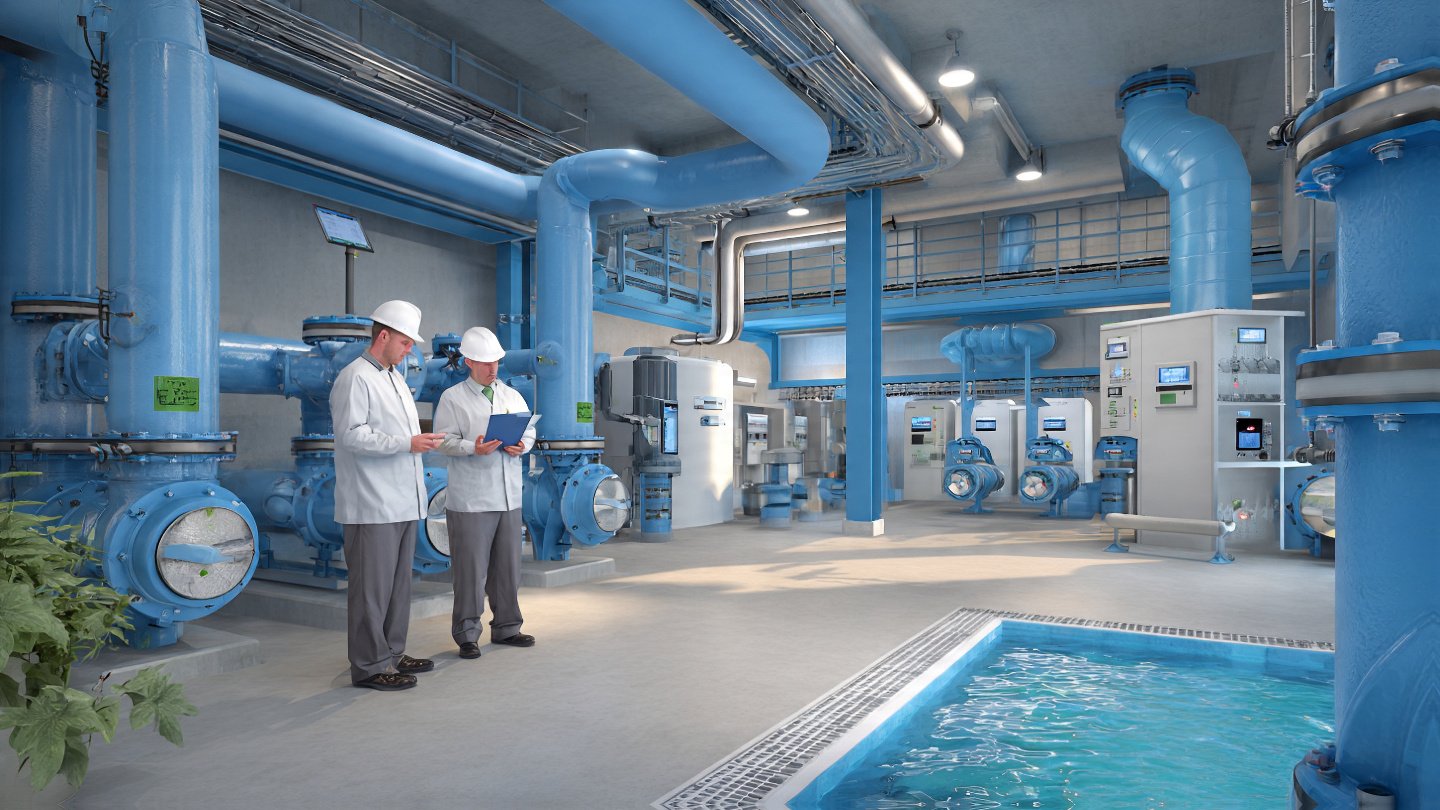
9. Conduct Environmental Audits
Regular environmental audits help identify compliance gaps before regulators do.
Keywords:
Environmental audit, compliance audit
10. Develop an Environmental Management System (EMS)
A structured EMS helps businesses manage environmental responsibilities effectively.
Keywords:
Environmental Management System, EMS implementation