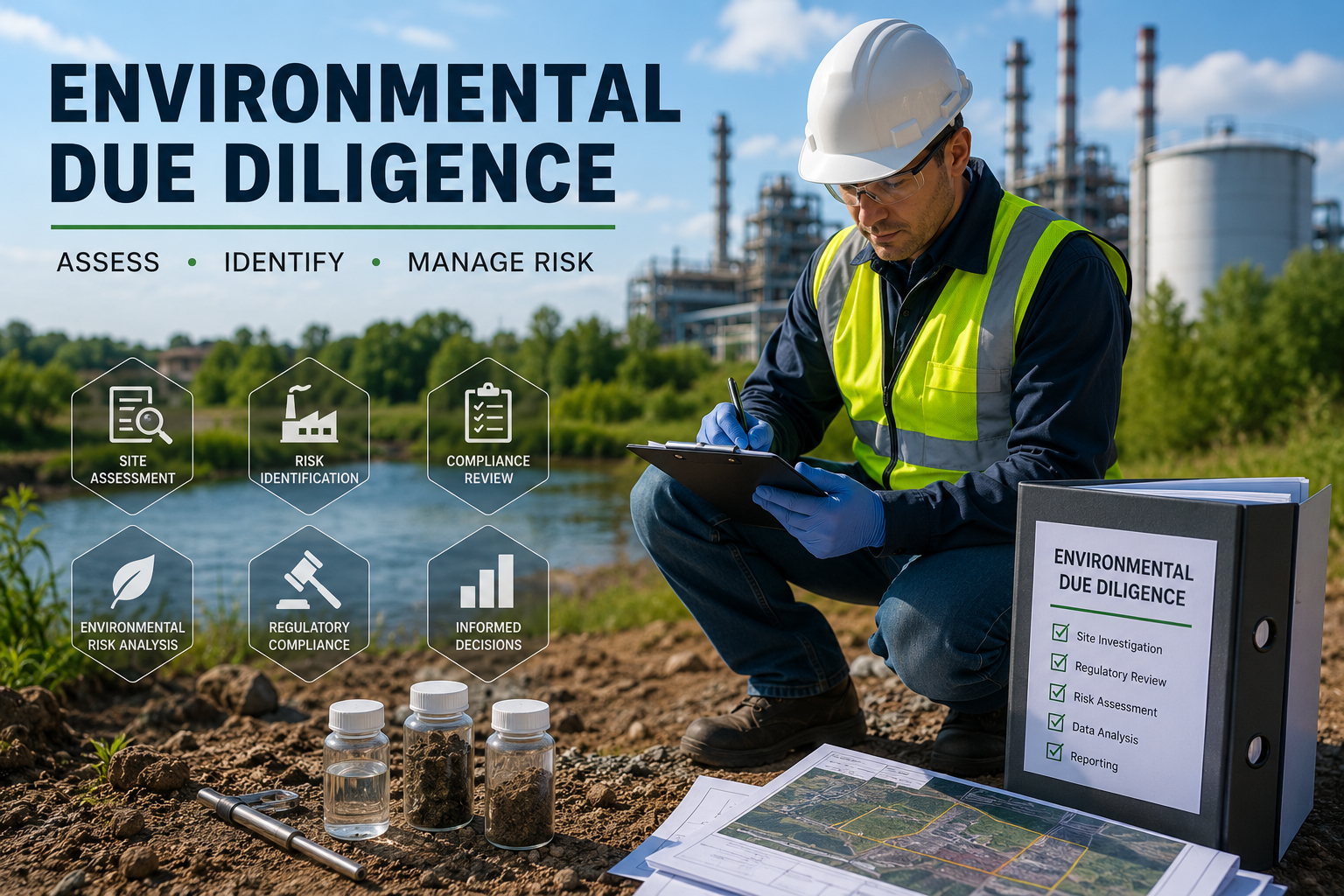
Environmental Due Diligence: The Complete Guide
Whether you’re buying commercial property, expanding your business, investing in industrial facilities, or planning a development project, environmental due diligence is one of the most important steps in protecting your investment.
Ignoring environmental risks can lead to expensive cleanup costs, regulatory penalties, legal liabilities, project delays, and reputational damage. A comprehensive environmental due diligence process helps businesses identify potential environmental issues before they become costly problems.
In this complete guide, you’ll learn:
- What environmental due diligence is
- Why it matters
- The environmental due diligence process
- Environmental Site Assessments (Phase I & Phase II)
- Environmental risk assessment
- Environmental compliance requirements
- Common environmental liabilities
- Costs and timelines
- Best practices for businesses
Whether you’re a property developer, lender, manufacturer, investor, or business owner, this guide will help you make informed decisions while reducing environmental and financial risks.
What Is Environmental Due Diligence?
Environmental due diligence is the process of evaluating environmental conditions, regulatory compliance, and potential environmental liabilities before purchasing, leasing, financing, or developing a property or business.
The goal is to identify existing or potential environmental risks that could affect property value, business operations, or legal responsibilities.
Environmental due diligence commonly includes:
- Environmental Site Assessment (ESA)
- Environmental Risk Assessment
- Soil contamination evaluation
- Groundwater testing
- Air quality assessment
- Hazardous waste assessment
- Environmental compliance review
- Historical land use investigation
- Regulatory database review
- Environmental management review
Instead of reacting to environmental problems after acquisition, organizations use due diligence to identify issues before making financial commitments.
Why Environmental Due Diligence Is Important
Environmental due diligence protects businesses from significant financial and legal risks.
Without proper environmental investigations, companies may unknowingly purchase contaminated land or inherit environmental liabilities that cost millions to remediate.
Benefits include:
- Identifying environmental contamination
- Reducing legal liability
- Supporting regulatory compliance
- Protecting investments
- Improving business reputation
- Reducing project delays
- Meeting lender requirements
- Supporting ESG initiatives
- Improving sustainability performance
- Protecting employee and community health
Businesses that conduct environmental due diligence make better investment decisions while minimizing unexpected environmental costs.

Who Needs Environmental Due Diligence?
Environmental due diligence is valuable across many industries.
It is commonly required for:
- Commercial real estate developers
- Industrial facilities
- Manufacturing companies
- Construction firms
- Energy companies
- Banks and lenders
- Property investors
- Government agencies
- Municipal authorities
- Warehousing operations
- Logistics companies
- Mining companies
- Agricultural businesses
- Healthcare facilities
- Educational institutions
Even businesses purchasing existing facilities should perform environmental due diligence before completing a transaction.
The Environmental Due Diligence Process
A professional environmental consulting firm typically follows a structured process.
Step 1: Define Project Scope
The consultant identifies:
- Property type
- Business activities
- Historical land use
- Regulatory requirements
- Client objectives
Step 2: Collect Historical Information
Historical records help determine previous land uses that may have caused contamination.
Sources include:
- Aerial photographs
- Historical maps
- Property records
- Government databases
- Environmental permits
- Previous environmental reports
Step 3: Site Inspection
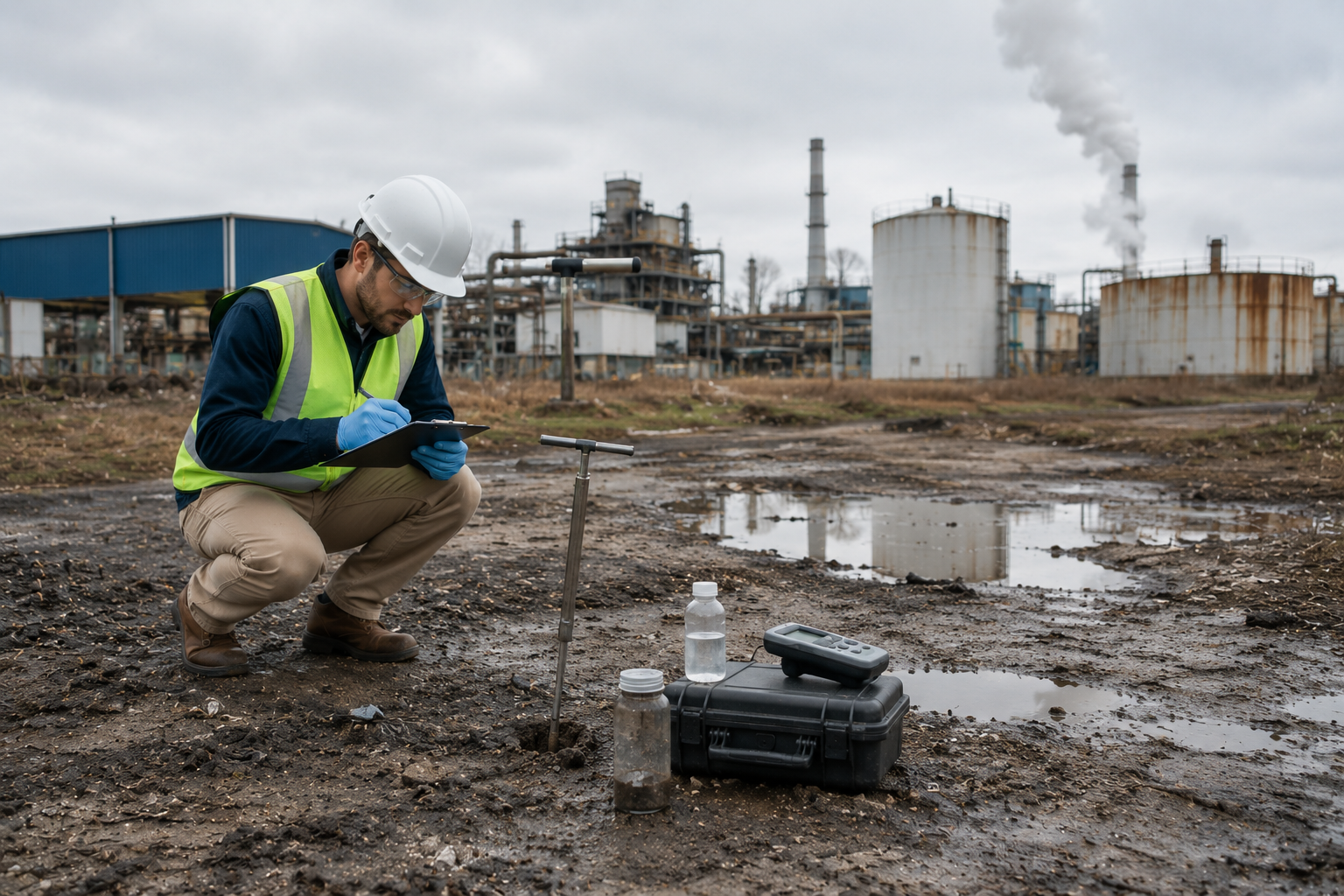
Environmental professionals conduct a detailed site visit to identify:
- Chemical storage
- Underground storage tanks
- Waste disposal areas
- Oil stains
- Asbestos-containing materials
- PCB equipment
- Spill evidence
- Surface water conditions
- Drainage systems
- Air emissions sources
Visual observations often identify environmental concerns requiring further investigation.
Step 4: Environmental Site Assessment (ESA)
One of the most important parts of environmental due diligence is the Environmental Site Assessment (ESA).
Phase I Environmental Site Assessment
A Phase I ESA evaluates environmental conditions without collecting physical samples.
It includes:
- Site inspection
- Historical review
- Regulatory database search
- Interviews
- Environmental records review
The goal is to identify Recognized Environmental Conditions (RECs).
Phase II Environmental Site Assessment
If Phase I identifies potential contamination, a Phase II ESA may be required.
Activities include:
- Soil sampling
- Groundwater testing
- Surface water analysis
- Laboratory testing
- Vapor intrusion evaluation
This investigation confirms whether contamination exists and its extent.
Environmental Risk Assessment
Environmental Risk Assessment evaluates the likelihood that environmental hazards will impact human health, ecosystems, or business operations.
Common risks include:
- Soil contamination
- Groundwater pollution
- Hazardous chemicals
- Air pollution
- Industrial waste
- Stormwater runoff
- Chemical spills
- Environmental accidents
Risk assessments help businesses prioritize corrective actions before problems become more severe.

Environmental Compliance Review
Environmental compliance ensures that business operations meet local, state, and federal environmental regulations.
A compliance review examines:
- Air permits
- Water discharge permits
- Hazardous waste management
- Chemical storage
- Spill prevention plans
- Environmental reporting
- Environmental monitoring records
- Wastewater management
- Stormwater permits
- Environmental training documentation
Non-compliance can result in costly fines and operational disruptions.
Common Environmental Liabilities
Environmental liabilities can significantly reduce property value and increase operational costs.
Examples include:
- Contaminated soil
- Groundwater pollution
- Hazardous waste violations
- Underground storage tank leaks
- Illegal waste disposal
- Air emissions violations
- Water contamination
- Asbestos
- Lead-based paint
- Mold contamination
Identifying these liabilities before acquisition helps buyers negotiate repairs or reconsider the investment.
Benefits of Environmental Due Diligence
A comprehensive due diligence process offers numerous advantages.
Protects Investments
Businesses avoid unexpected environmental cleanup costs.
Reduces Legal Risks
Proper assessments reduce exposure to lawsuits and regulatory enforcement.
Supports Financing
Many banks require Environmental Site Assessments before approving commercial loans.
Improves Business Reputation
Environmental responsibility strengthens relationships with customers, investors, and regulators.
Supports Sustainability Goals
Environmental due diligence aligns with ESG reporting and corporate sustainability initiatives.
Improves Decision-Making
Reliable environmental data enables informed investment and operational decisions.
Environmental Due Diligence Checklist
Before acquiring or developing a property, businesses should verify:
- Historical property use
- Environmental permits
- Regulatory compliance
- Hazardous materials inventory
- Underground storage tanks
- Soil contamination
- Groundwater quality
- Air emissions
- Waste management practices
- Chemical storage
- Stormwater management
- Wastewater systems
- Spill prevention procedures
- Environmental monitoring data
- Previous environmental reports
A structured checklist ensures no critical environmental issues are overlooked.

Common Mistakes to Avoid
Many organizations underestimate the importance of environmental due diligence.
Common mistakes include:
- Skipping a Phase I ESA
- Ignoring historical property use
- Failing to review environmental permits
- Overlooking groundwater contamination
- Not assessing hazardous waste storage
- Hiring inexperienced consultants
- Failing to document findings
- Delaying corrective actions
- Ignoring environmental regulations
- Assuming older reports remain accurate
Avoiding these mistakes can save substantial time and money.
Best Practices
To maximize the value of environmental due diligence:
- Begin assessments early in the transaction process.
- Work with qualified environmental consultants.
- Keep detailed environmental records.
- Review applicable regulations regularly.
- Update environmental assessments when conditions change.
- Conduct routine environmental monitoring.
- Integrate environmental due diligence into risk management strategies.
- Develop corrective action plans for identified issues.
- Maintain compliance with environmental permits.
- Continuously improve environmental management systems.
Frequently Asked Questions
How long does environmental due diligence take?
Most projects take between two and six weeks, depending on property size, complexity, and whether additional investigations such as Phase II ESA are required.
Is environmental due diligence required?
While not always legally required, it is strongly recommended for commercial property transactions, mergers, acquisitions, financing, and industrial developments.
What is the difference between environmental due diligence and an Environmental Site Assessment?
Environmental due diligence is the overall evaluation process. An Environmental Site Assessment is one component of that process used to identify potential environmental contamination.
Why is environmental compliance important?
Environmental compliance helps businesses avoid fines, legal actions, operational disruptions, and reputational damage while supporting sustainable business practices.
When should a Phase II Environmental Site Assessment be conducted?
A Phase II ESA is recommended when a Phase I ESA identifies Recognized Environmental Conditions or other signs of potential contamination.
Conclusion
Environmental due diligence is more than a regulatory requirement—it’s a strategic investment in the long-term success of your business. By identifying environmental risks early, ensuring compliance, and conducting thorough Environmental Site Assessments and Environmental Risk Assessments, organizations can protect assets, reduce liabilities, and make informed decisions with confidence.